

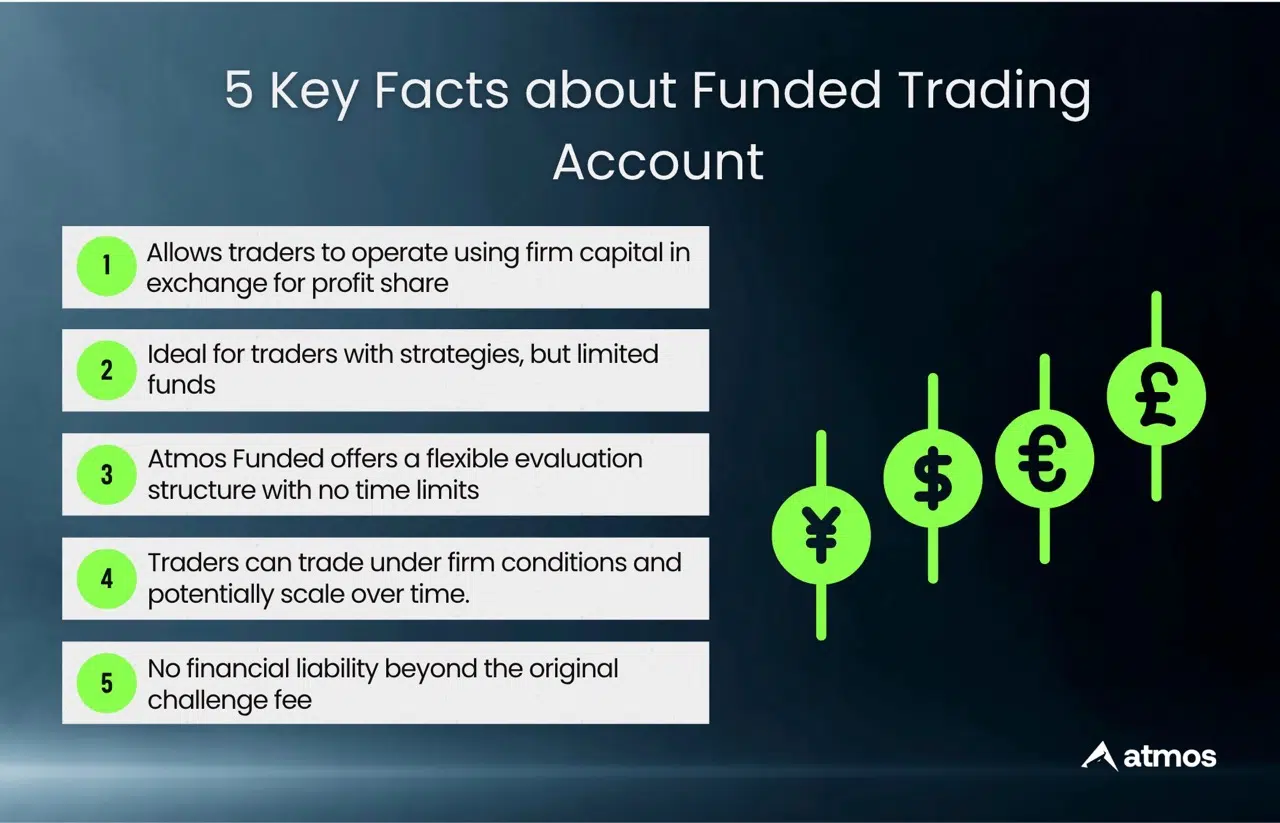
A crypto-funded trading account can give skilled traders access to a much larger simulated capital base than they may have in a personal account. But the opportunity comes with a framework. A funded trader is expected to demonstrate profitability while controlling drawdown, following trading limits, and avoiding practices that create excessive risk.
These rules are not simply technical conditions to pass an evaluation. They are designed to test whether a trader can maintain discipline when market conditions become volatile. Understanding the rules before entering a challenge can help traders build a realistic strategy instead of treating the evaluation like a race for quick profits.
1. Meet the Required Profit Target
Most evaluation programs establish a specific profit objective. The trader must reach that target without breaching the applicable drawdown limits. This creates an important distinction between profitable trading and successful evaluation trading. A trader might make a large gain in one session, but taking excessive risk to achieve it can put the entire account at risk.
A more sustainable approach is to define the amount of risk acceptable per trade, establish entry and exit conditions, and allow profits to accumulate gradually. Traders should also check whether positions must be closed before an evaluation objective can be completed.
2. Respect the Maximum Daily Loss
The daily loss limit is one of the most important rules to understand before opening a position. If losses reach the permitted daily threshold, the trader can be disqualified even when the overall account remains above its maximum loss level. This means a trader should not calculate risk only from the total account balance. Daily exposure matters too.
A practical risk-management plan might include:
- Setting a maximum amount to risk each day.
- Reducing position size after consecutive losses.
- Avoiding revenge trading after an unsuccessful entry.
- Stopping for the day once the personal loss threshold is reached.
3. Stay Below the Maximum Overall Loss
The maximum loss rule protects the account from uncontrolled drawdown. Unlike a daily limit, this threshold concerns the broader account performance. For example, repeatedly increasing position size after losses can create a downward spiral.
Even if individual trades appear reasonable, accumulated losses can eventually breach the maximum drawdown. This is why professional-style risk management usually focuses on preserving trading capital first. A trader who protects downside has more opportunities to recover from normal losing streaks.
4. Complete the Required Trading Days
Some challenges require traders to remain active for a minimum number of trading days. This prevents someone from reaching the profit target through one unusually successful session and immediately completing the evaluation. This type of requirement encourages consistency. Instead of relying on one large trade, traders need to demonstrate that their strategy can operate across multiple sessions.
5. Understand Position and Exposure Restrictions
Position limits can vary considerably among prop firms. Traders should understand how many trades they can have open simultaneously, whether correlated positions are treated as one exposure, and whether there are restrictions on holding trades overnight or for extended periods. These details matter because a strategy that works perfectly in a personal account may not comply with a particular firm’s account conditions.
6. Avoid Prohibited Trading Practices
A prop firm’s prohibited-practice rules deserve as much attention as its profit target. Traders may be restricted from using certain forms of arbitrage, exploiting platform errors, manipulating execution conditions, or using strategies considered inconsistent with the program’s purpose. The broader lesson is simple: do not design a strategy around finding loopholes in the rules. A trading approach should be repeatable, risk-controlled, and compatible with the firm’s terms.
What Happens After You Pass the Challenge?
Passing an evaluation does not mean the rules disappear. In many programs, the trader moves into a funded or trader stage where performance continues to be monitored. This distinction is important. Traders should read the provider’s terms carefully to understand exactly what “funded” means, how rewards are calculated, and what conditions apply to withdrawals.
How Can Traders Stay Within the Rules?
Knowing the rules is only half the job. The real challenge is incorporating them into everyday trading decisions.
A disciplined trader can:
- Calculate position size before entering a trade.
- Set stop-loss levels according to market structure and risk tolerance.
- Monitor both daily and total drawdown.
- Keep a trading journal.
- Avoid increasing risk after a losing trade.
- Review prohibited-practice rules regularly.
- Check payout and withdrawal conditions before starting.
- Trade a strategy that fits the account’s restrictions.
Most importantly, traders should avoid confusing the account’s maximum permitted loss with an amount they are expected to lose. A drawdown limit is a safety boundary, not a target.
What Should You Check Before Choosing a Prop Firm?
Before paying for any challenge, read the complete rulebook rather than relying only on promotional claims. Look for clear information about profit targets, daily loss, maximum drawdown, minimum trading days, leverage, trading hours, prohibited strategies, holding periods, payout conditions, and account termination. Understanding this structure helps set realistic expectations and prevents confusion later.
Conclusion
A crypto-funded trading account is built around disciplined trading, not simply earning quick profits. Traders must meet profit goals while staying within daily loss, drawdown, exposure, and strategy restrictions. Understanding these conditions before starting can prevent costly mistakes. Anyone exploring prop firm crypto trading funded account options should choose a program whose rules match their trading style and focus on consistency, risk control, and sustainable performance.
Bitfunded provides structured simulated trading programs for traders seeking to develop their skills within defined risk parameters. Participants can trade simulated funded accounts while pursuing performance objectives and following established rules. The platform focuses on disciplined decision-making, consistent performance, and responsible risk management throughout the trading journey.
