

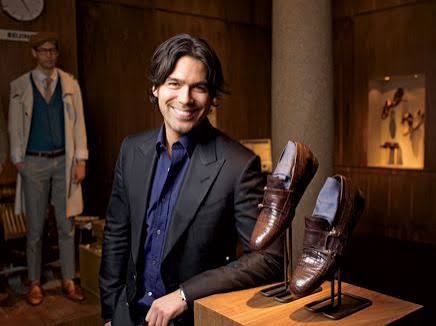
He had jackets he liked, trousers that fit well, knit polos he wore constantly, and a small group of shirts that made weekday mornings easy. The problem appeared lower down. Some shoes looked good by themselves but made the rest of an outfit feel harder than it needed to be.
He noticed it one Friday before dinner in Denver.
The olive overshirt worked. The charcoal trousers worked. The white tee underneath was simple enough. Then he changed shoes three times.
One option made the outfit feel too formal. Another pulled everything toward weekend casual. A third had enough detail that the overshirt suddenly seemed busy too.
Cody eventually left in the least complicated pair he owned.
What bothered him was not that he lacked choices. He had plenty.
The problem was that too many of those choices asked the rest of his closet to cooperate.
2. He Stopped Starting With the Shoes
For years, Cody often dressed from the ground up.
If he felt like wearing a certain pair, he found trousers that worked with it, then a shirt, then whatever jacket finished the look. That was fine on days when getting dressed was part of the entertainment.
It was less appealing at 7:40 on a weekday morning.
So he reversed the order.
Pants first. Then shirt or knit. Jacket if the weather called for one. Footwear came last.
That change exposed a lot.
Some pairs only looked right when the entire outfit had been built around them. Others could arrive at the end and make sense immediately.
Cody started preferring the latter.
It also made his wardrobe feel less staged. Not every outfit needed a focal point. Some mornings he wanted the suede jacket to carry the texture. Other days the trousers had enough shape on their own.
The shoe did not always need to announce why it was there.
3. Casual Had More Than One Level
Cody’s office did not have a strict dress code, but “casual” still shifted depending on the day.
Desk work was one thing. A client lunch was another. A late-afternoon presentation could call for slightly more polish without becoming formal.
That was where bally men sneakers became more interesting to him.
He liked footwear that could sit between athletic and polished without looking undecided. Too technical, and it pulled attention toward performance. Too sleek, and it could feel detached from a relaxed jacket or softer trouser.
Cody’s better outfits usually mixed levels instead of keeping everything equally casual.
A crisp shirt with easier pants. A structured overshirt over a soft tee. A clean shoe beneath a jacket with some texture.
The combinations did not need to fit one category perfectly.
They only had to make sense together.
4. Jackets Changed the Bottom Half Too
Cody owned more jackets than he needed and wore almost all of them.
A suede trucker made an outfit warmer and more textured. A lightweight bomber gave the same trousers cleaner edges. An unstructured blazer shifted the whole thing upward in formality. A field jacket added enough visual weight that heavier footwear could suddenly feel unnecessary.
He began using jackets as a quick test.
Same pants. Same shirt. Different outer layer.
The footwear stayed.
That was enough to reveal whether a pair had real range or only worked inside one narrow combination.
Denver made this useful because outer layers changed constantly. A cool morning could turn mild by lunch. Something that felt right under a field jacket at 8 a.m. might look very different once the jacket came off.
Cody became less interested in shoes that needed one exact silhouette above them.
He wanted the bottom of the outfit to survive a change in the top half.
5. Material Started Carrying More of the Style
Branding moved lower on Cody’s list once he started noticing surfaces more closely.
Smooth leather brought a different kind of polish than suede. Grain added texture without becoming loud. Technical fabric made a pair feel lighter visually, even when the sole itself had some weight. Mixed materials could add depth without relying on strong color contrast.
That changed what caught his attention.
A simple silhouette in an interesting surface could hold up better than a more complicated design. Suede could soften trousers that felt slightly too sharp. Smooth leather could settle an outfit made from brushed or textured fabrics.
He especially noticed this with jackets.
A matte upper beneath suede often felt natural. A cleaner leather surface under a casual blazer could give the bottom half enough order without pushing it into dress-shoe territory.
Cody stopped thinking about material as decoration.
It had become part of the outfit’s overall texture.
6. Leather Worked Best Without Becoming Dressy
Cody had always liked leather footwear, but the versions he used most were not the most polished.
For him, Bally leather sneakers for men worked better when the leather gave some structure without making the entire shoe feel formal.
The upper was only part of that equation.
Toe shape mattered. So did the sole, the amount of stitching, and whether the panels interrupted the leather enough to keep it relaxed.
A completely smooth surface paired with a narrow profile could feel too refined beneath casual trousers. A slightly broader base or a few understated construction details made the same idea easier to live with.
Cody liked leather most when it did not demand a change in behavior.
He wanted to wear it with a knit polo on Thursday and a sweatshirt under a jacket on Sunday without either combination looking like a compromise.
That middle space suited him.
7. He Quit Matching Colors So Literally
Cody used to think coordination meant repetition.
Brown somewhere above, brown below. Dark jacket, dark footwear. Light shirt, lighter shoe.
It worked. It also made some outfits feel too deliberate.
He gradually moved toward balance instead.
A dark shoe could ground lighter trousers without matching anything else. A quieter upper could calm a jacket with more texture. A more visible sole could work when everything above it was restrained.
Temperature mattered too.
Warm fabrics did not require warm footwear. Cool gray trousers did not need another gray element below.
Once Cody stopped looking for direct color echoes, his closet opened up.
He also stopped changing one piece just to justify another.
That saved time and made the combinations feel less arranged.
8. One Category Connected More of the Closet
By late summer, Cody could see which footwear kept appearing with different parts of his wardrobe.
The most useful pairs were not the dressiest or the most relaxed. They sat somewhere between those extremes, which happened to be where most of his clothes lived too.
That was when Bally men shoes began to make more sense as part of the closet rather than as individual statement pieces.
They could sit beneath tailored trousers without feeling stiff, yet still work under an overshirt or bomber without looking overly polished.
Cody noticed this most when he repeated garments in different combinations.
The same charcoal trousers might appear with an Oxford shirt on Tuesday and a tee with a field jacket on Saturday. He did not need the exact same footwear both times, but he liked having options that could move between those versions of the outfit.
The usefulness was less about maximum versatility.
It was about reducing the number of dead ends in the closet.
9. Socks Finally Became Visible
Cody had never thought much about socks until his trousers became slightly shorter.
Then there was suddenly space between the hem and the shoe.
A thin sock almost disappeared. A heavier ribbed one introduced texture. More contrast made the shoe feel separate from the pants; less contrast connected them.
In summer, thinner socks kept the transition clean. By late fall, with heavier trousers and knitwear, the same choice could look too delicate.
Cody began treating socks as a bridge rather than an afterthought.
They also changed how low-profile footwear looked.
A little more fabric above the collar could make the shoe feel more grounded. Barely visible socks made the same pair seem lighter and more casual.
He did not plan this with much precision.
He just stopped pretending socks were invisible.
10. Weekend Clothes Needed Their Own Balance
Cody dressed down on weekends, but he rarely wanted to look as though he had stopped paying attention.
Saturday might mean a bookstore, lunch with friends, a gallery in RiNo, or coffee that stretched into the afternoon. He usually wore denim, easy trousers, a sweatshirt, or a light jacket.
That was where bally men sneakers fit differently than they did during the workweek.
He wanted less polish, but not complete informality.
Something too refined could sit awkwardly beneath washed denim and a sweatshirt. Something heavily athletic could push the outfit farther than he wanted in the opposite direction.
Cody often landed in the middle.
Enough structure to keep the look deliberate. Enough ease to let the rest of the outfit stay relaxed.
He also noticed that weekend shoes benefited from repetition.
A pair that looked slightly better after being worn often usually felt more at home with broken-in denim than something that still looked untouched.
11. Good Materials Became More Interesting With Use
Cody had gradually become less interested in keeping everything pristine.
He liked what happened when good materials settled into the wardrobe.
Leather softened. Suede changed depending on how the nap moved. Stitching became less visually sharp and more integrated with the upper. Small surface marks sometimes added character rather than taking it away.
What mattered was whether the material aged in a way that still fit the clothes around it.
A smooth pair that became slightly softer could begin working better with denim. Suede with some variation often sat more naturally next to brushed shirts and textured jackets than it had when new.
Cody did not want footwear to look worn out quickly.
But untouched perfection was not the goal either.
Some pieces became easier to wear once they stopped looking freshly introduced to the closet.
12. Smart Casual Was Broader Than He Had Assumed
Cody once pictured smart casual as a fairly narrow formula: chinos, button-down shirt, maybe a blazer.
His actual week looked different.
A knit polo under a suede jacket could work. So could relaxed trousers with a tucked tee and overshirt. An Oxford shirt did not always need dressier footwear, and a casual blazer could handle more ease below.
That was where Bally shoes for smart casual outfits made sense to him.
The footwear did not need to decide whether the outfit was smart or casual. Most of the time, the interesting part came from the tension between the two.
Cody liked one polished element against something more relaxed.
A sharper shirt with softer pants. A structured jacket over a plain knit. Cleaner footwear beneath a less formal outer layer.
Once he stopped trying to make every piece sit at the same level of formality, the combinations improved.
13. Denver Made Seasonality Hard to Ignore
Cody’s wardrobe changed visibly across the year.
Spring brought lighter trousers and jackets that often came off by midday. Summer removed layers almost completely. Fall brought heavier chinos, suede, brushed shirts, knitwear, and thicker outerwear back into rotation.
The footwear that worked in June did not always have the right visual weight in October.
That did not bother him.
A lighter-looking pair could be ideal with warm-weather fabrics and then disappear once the clothes became heavier. Something more substantial might feel perfectly balanced under a fall jacket but unnecessarily heavy during summer.
Cody stopped expecting every pair to earn twelve months of use.
He liked the rhythm of putting certain shoes away and returning to them later.
They felt familiar without feeling overused.
Seasonal limits were not always weaknesses.
Sometimes they were what made a pair feel right when its time came around again.
14. He Became Comfortable With Overlap
Cody used to think every pair needed a completely different purpose.
That idea made the closet more complicated than it needed to be.
Different Bally men shoes could overlap and still earn their place. One might work slightly better beneath trousers. Another might have more texture and feel easier with denim or softer jackets.
The distinction did not need to be dramatic.
What mattered was whether Cody naturally reached for each one in different combinations.
That made the wardrobe less rigid.
He no longer needed to justify every pair with a separate category or assign it one specific day of the week. Some pieces simply occupied similar territory with different moods.
That was enough.
The closet did not need perfect efficiency.
It needed enough variety to keep getting dressed interesting without creating unnecessary friction.
15. The Pairs Near the Door Told the Story
By the end of the year, Cody had a better way to tell which shoes really belonged in his wardrobe.
He looked near the door.
The pairs there were rarely the ones that had made the biggest impression when new. They were the ones that kept finding their way into actual outfits.
One worked beneath two trouser cuts. Another made sense with both a bomber and a suede jacket. A third had softened enough that it looked better beside broken-in denim than it had the day he brought it home.
Cody still kept exceptions.
There were shoes he liked despite wearing them less often. He had no interest in turning his closet into an efficiency project.
But the frequently worn pairs usually shared one thing: they did not ask for much.
One Saturday morning, he checked the weather, saw a jacket hanging over the chair, and already knew which shoes he would wear before the coffee had finished brewing.
That felt more useful than any perfect formula.
